How to get rid of dents and dents on the car

If a specialist removes a dent or dent on the vehicle, he charges a lot of money for it. With a little manual dexterity, you can repair such damage yourself.
Due to a little carelessness, you accidentally made a dent in your car. Of course, you can give the car for repair. But even barely visible damage to the bodywork is expensive if it is repaired by a specialist. A sum of several 100 euros quickly accumulates. Even if the expert uses modern state-of-the-art processes, even mini scratches cost a lot of money. You can save these costs if you do it yourself.
Pulling dents and dents out of the sheet metal is not as difficult as it seems at first glance. It is important that you work carefully. A little manual dexterity can't hurt. With the right tools and a little patience, you can repair a dent or dent on your car.

Only minor damage can be repaired by yourself
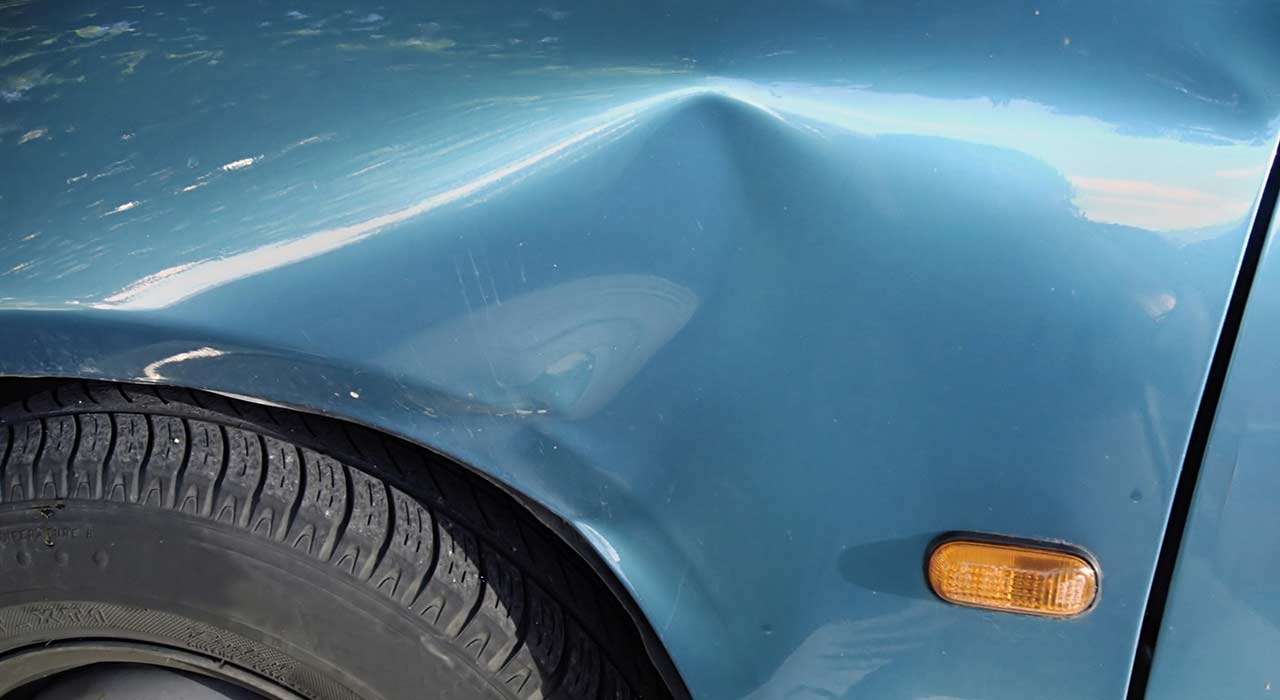
Before you get to work, take a close look at the dent. Even with tact and craftsmanship experience, you should only remove small dents yourself. If it is a smooth or round bump, you can do it yourself. Dents are easy to dent without damage to the paintwork. The situation is different in the case of deep or large damage. Check if the paint is damaged and if the white primer is visible. Take a close look to see if you can even see the sheet metal. You should have such deep damage repaired quickly by a specialist. Deep dents with damage to the paintwork can cause rust to form. You should avoid this at all costs so as not to reduce the value of your vehicle unnecessarily.
Just as with a deep dent, you should also have major damage repaired by a specialist company. A particular challenge is flat dents that extend over several car parts. So if the fender and door are damaged, the workshop must help. If the entire bumper is affected, it is also time to go to the workshop. And even in the event of a large-scale deformation of the trunk or bonnet, the repair by the experts for body and paint work is the better decision.
In the case of filling and painting work, it is often possible to see exactly whether a layman was at work. Modern multi-layer and metallic paints in particular are so complex that a craftsman without experience and without special equipment cannot work cleanly. So if your car has such a paint or colour, the dent should be repaired by a specialist company.
You need this tool for dent removal
If you want to dent your vehicle, you can use a professional set or work with conventional tools. A professional set is often expensive. They must expect costs of several 1,000 euros. However, you may also have a heat gun, a rubber mallet, a suction cup, car polish, glass cleaner and tools for removing the trim in your basement. If you have manual dexterity, these devices are enough to fix a small dent. Of course, you shouldn't expect top results when you use this tool for laymen. In return, you save yourself the often disproportionately high costs, especially in the case of small dents.
How to dent correctly
It is very important that you proceed carefully when denting. Even a single blow with a hammer can be enough to cause the dent in the sheet metal to stretch in the opposite direction. You should avoid this at all costs. You should proceed with a lot of tact. It is also important to pay attention to the right outside temperature. In order for the paint to react well to a light blow with the hammer and react elastically to it, the outside temperatures must be slightly higher. You can also work in a heated garage. If necessary, warm the dent slightly with a hot hair dryer. This keeps the paint elastic and adapts to the movement of the body.
First you have to free the dented area in the sheet metal from the panel. You should remove interior panels, and you may also need to remove the door panes. A workshop manual for your car can be helpful if you don't know exactly how your vehicle is built. In the next step, you can heat the paint slightly from the outside with a heat gun. If you keep a distance of about ten centimeters between the hot air and the paint, you will avoid damaging the heat-sensitive surface.
When the varnish is slightly warmed, try to squeeze out the dent with your hand. This is particularly recommended because you do not damage the surrounding body any further. In addition, you will not use strong force with your hand. The sheet metal is therefore treated gently and not unnecessarily stressed. If there is no other way, you can also apply a blow with a rubber mallet to dent it. From the outside, apply a suction cup to enhance the effect.
At this point, it is very important not to stretch the sheet too much. It is better to use too little force. If you proceed carelessly here, the paint can chip off. In addition, the bump can push outwards. Of course, such consequential damage must be avoided at all costs. If you want to dent a larger area, keep the tray warm. This keeps the polish elastic and easier to shape. You can check the result of your work well with a lamp. If you hold it at a slight angle to the bump, you can see quite well whether the bump still exists or has largely been repaired.
Hail damage requires special accessories
If your vehicle is parked outdoors, there is a risk of hail damage during severe storms. Slight damage to the bodywork can be repaired by yourself. This is important because dents of hailstones can usually be seen over at least the entire hood and on the roof. You can remove hail dents with so-called pins. This will pull the dent from the inside out. So there is no need to remove a fairing or push the dent up from the bottom of the body. The dent is removed by simply pulling it out.
The pins are shaped in different sizes. This allows you to adjust it to the size of the dent. As a rule, you start the dent removal with a large pin and reduce the size once the bump has become a little smaller. In most cases, you have to apply the pin to the paint with a hot glue. Start from the edge of the bump and slowly work your way to the center. Depending on the size of a dent, you'll need to glue about three to six pins to the edges of the dent. Then carefully pull the tray upwards. You are probably pulling the dent out a little further than you actually need to. This first creates a small bump on the outside. This is carefully smoothed out after denting. If there is still adhesive residue on the body, remove it with a cold spray. At the end, you should protect the sheet metal with a hard wax or with a nano sealant.
Even in the case of hail damage, it must not be too large and too deep. If even the paint is damaged, it is better to have your car repaired by a professional. He uses special tools and carries out the painting properly. This is somewhat more expensive, especially in the case of extensive damage. Nevertheless, you will get the value of your vehicle as a result. Hail damage reduces the selling price of your car quite considerably. Especially with newer cars, you should therefore leave the repair of the damage to a professional.
Care is the top priority
You can remove small dents and dents in the car quite well yourself. This requires some dexterity and a careful and cautious way of working. The right specialist tools are also needed. However, you can achieve passable results with the accessories you have in your workshop. However, you should hardly expect a result like a professional if you repair dents and dents in the car yourself. In the case of a new car or a planned resale, it may therefore be advisable to take the car to a specialist workshop. Otherwise, you may try to remove the dents yourself with the necessary care.